Introduction
Finding activities where children feel comfortable, included and understood is important for every family.
For parents of autistic and neurodivergent children, choosing activities can sometimes involve additional considerations:
- Will the environment be welcoming?
- Are sensory needs understood?
- Will my child feel comfortable?
- Are staff aware of neurodiversity?
- Can my child participate in their own way?
Families are increasingly looking for autism-friendly activities in Cambridge that provide safe, inclusive and enjoyable experiences.
The right activity is not only about entertainment. It can help children develop:
- Confidence
- Creativity
- Independence
- Communication skills
- Friendships
- New interests
At Thriving Beyond the Label, we believe every child deserves opportunities to explore their strengths and enjoy activities that celebrate who they are.
Our programmes and community initiatives support neurodivergent children and families across Cambridge, Cambridgeshire and beyond.
What Makes an Activity Autism-Friendly?
An autism-friendly activity is one that recognises and respects different ways children experience the world.
It does not mean every child must participate in the same way.
Instead, inclusive activities provide flexibility and understanding.
A supportive environment may include:
Sensory Awareness
Children may have different sensory preferences.
A welcoming activity considers:
- Noise levels
- Lighting
- Crowded spaces
- Movement opportunities
- Quiet areas
Flexible Participation
Some children may want to:
- Join immediately
- Observe first
- Take breaks
- Participate differently
A flexible approach allows children to engage comfortably.
Understanding Staff and Facilitators
Children benefit when adults understand:
- Autism
- Communication differences
- Sensory needs
- Individual preferences
A knowledgeable environment helps children and families feel confident.
Why Inclusive Activities Matter for Autistic Children
Activities provide more than just something to do.
They create opportunities for growth.
Building Confidence
When children participate in activities they enjoy, they can develop:
- Self-confidence
- Independence
- Problem-solving skills
- A sense of achievement
Success does not always look the same for every child.
For some children, success may be joining a group activity.
For others, it may be exploring something new at their own pace.
Encouraging Creativity
Creative activities allow children to express themselves.
Examples include:
- Art
- Music
- Design
- Coding
- Building projects
Many neurodivergent children have strong creative interests and unique ways of approaching challenges.
Supporting Social Connection
Inclusive activities provide opportunities for children and families to connect.
Children can develop relationships through shared interests rather than pressure to interact in a specific way.
Autism Activities for Children in Cambridge
Cambridge offers many opportunities for families looking for inclusive experiences.
The best activities are those that match a child’s interests, comfort level and support needs.
Here are examples of activities that can benefit autistic and neurodivergent children.
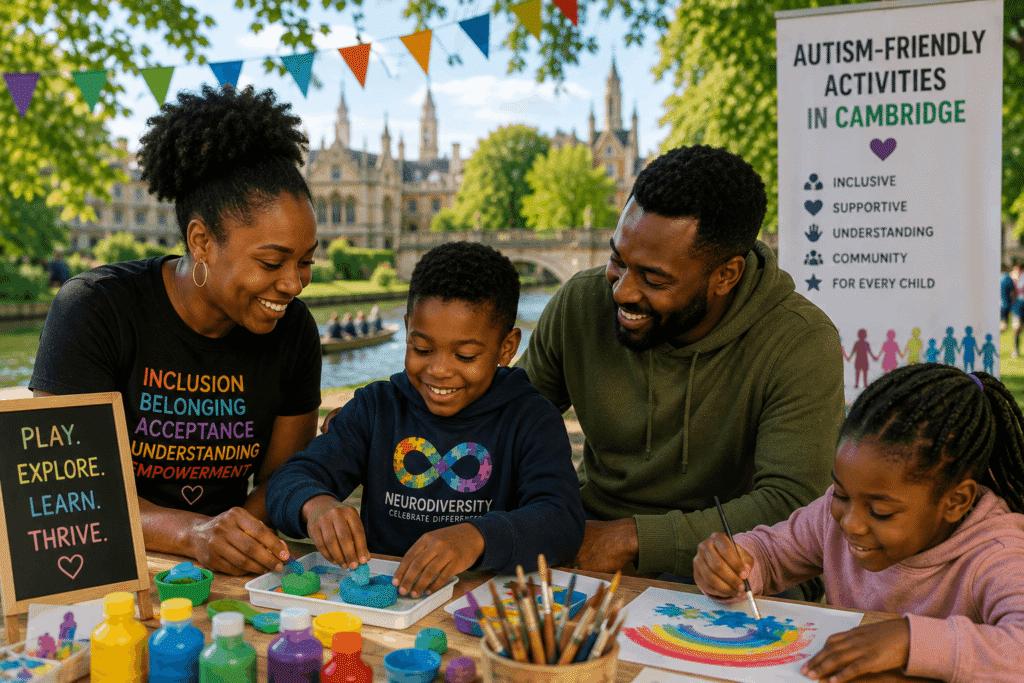
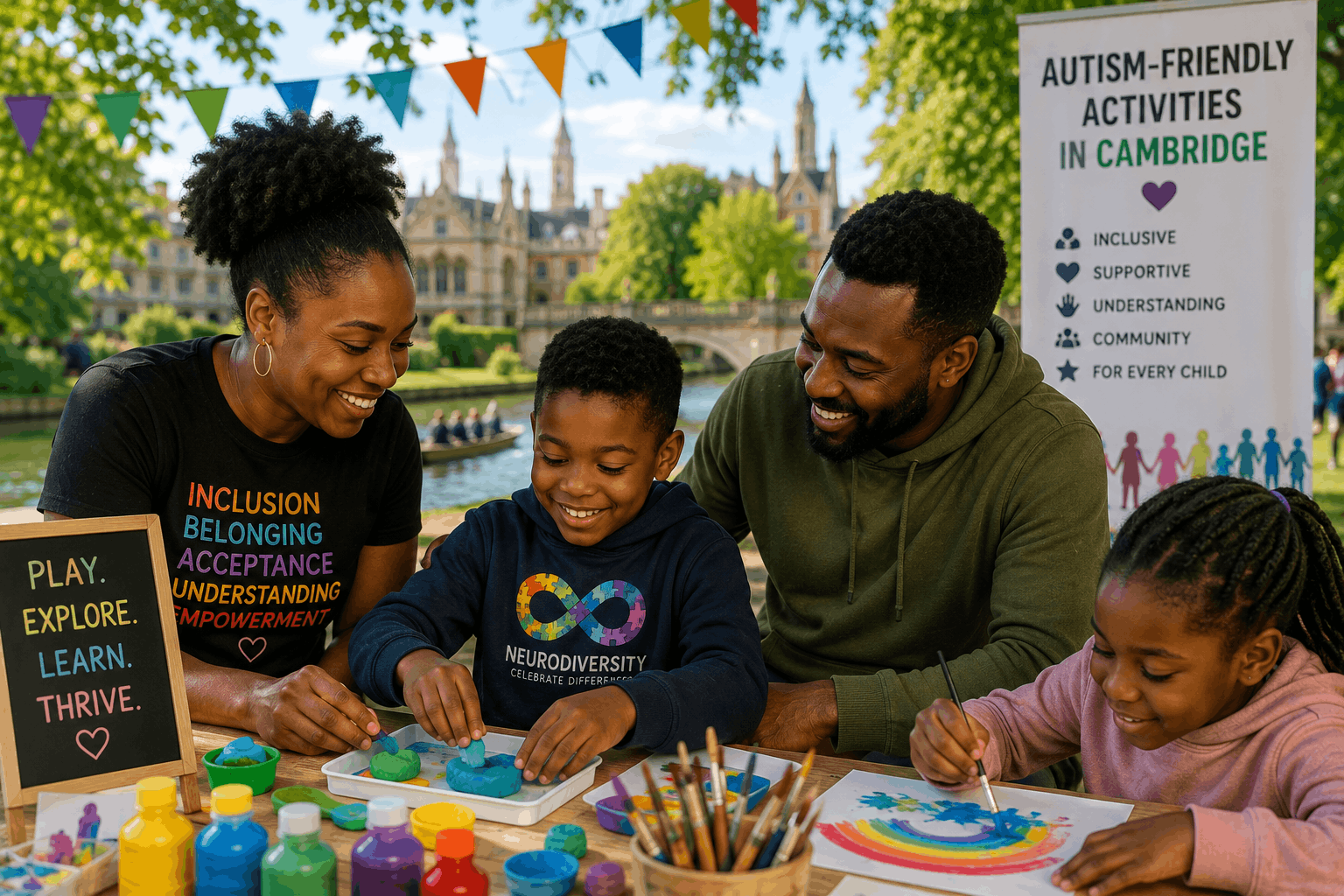
1. Creative Arts Activities
Creative activities are valuable for self-expression.
Examples include:
- Painting
- Drawing
- Crafts
- Photography
- Design projects
Creative activities can support:
- Imagination
- Fine motor skills
- Confidence
- Emotional expression
Many children enjoy creative activities because there is no single “right” way to participate.
2. STEM Activities
Many neurodivergent children enjoy exploring how things work.
STEM activities may include:
- Coding
- Science experiments
- Engineering challenges
- Technology projects
These activities can support:
- Problem-solving
- Logical thinking
- Curiosity
- Confidence
At Thriving Beyond the Label, STEM is included within our inclusive children’s programmes because we believe children should have opportunities to explore their interests.
3. Sensory Activities
Sensory activities can support children who experience sensory differences.
Examples include:
- Sensory play
- Water activities
- Texture exploration
- Movement activities
- Calm sensory spaces
Sensory activities can help children:
- Explore safely
- Develop awareness
- Regulate emotions
- Enjoy learning through experience
Learn more about sensory activities:
[Internal link to Blog 5]
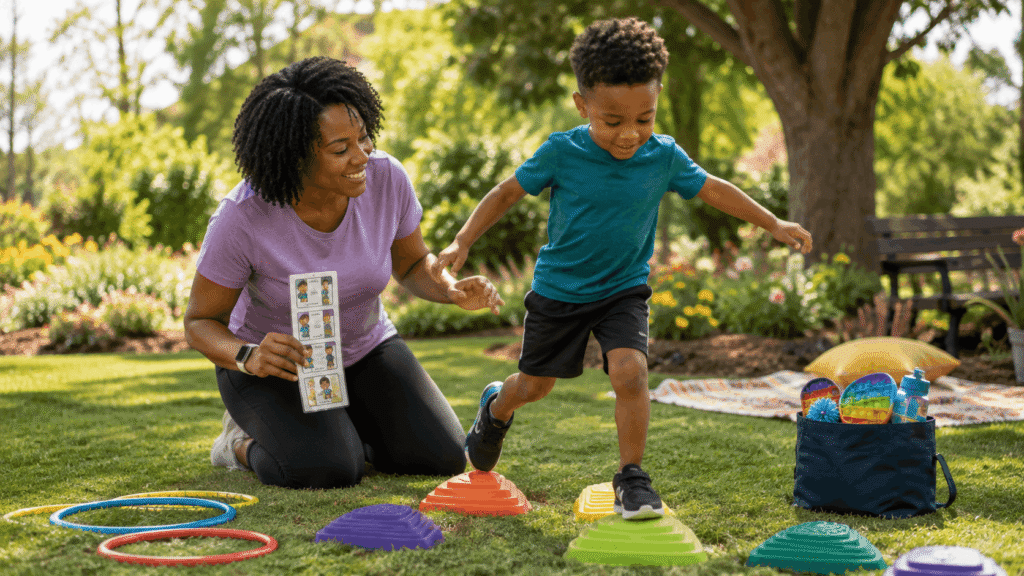
4. Outdoor Activities for Autism
Outdoor activities can provide valuable sensory and physical experiences.
Examples:
- Nature walks
- Gardening
- Outdoor games
- Exploring parks
- Nature-based learning
Outdoor environments can support:
- Physical wellbeing
- Curiosity
- Confidence
- Relaxation
Some children find outdoor spaces easier because they provide more room and fewer sensory pressures than busy indoor environments.
5. Music and Movement Activities
Music can be a powerful way for children to connect and express themselves.
Activities may include:
- Singing
- Dancing
- Rhythm games
- Playing instruments
Movement activities can support:
- Coordination
- Emotional expression
- Body awareness
- Confidence
Inclusive Family Activities in Cambridge
Families often look for activities where everyone feels welcome.
Family-friendly inclusive activities can help:
- Children participate comfortably
- Parents connect with others
- Families build positive experiences together
A supportive community reduces isolation and helps families feel understood.
Thriving Interests Holiday Club: Inclusive Activities for Neurodivergent Children
At Thriving Beyond the Label, our Thriving Interests Holiday Club provides an inclusive holiday experience for neurodivergent children aged 5–13.
The programme combines:
- Creative arts
- STEM
- Music
- Movement
- Sensory play
- Life skills
Children are encouraged to discover their interests, develop confidence and enjoy learning in a supportive environment.
Our focus is not only on activities.
It is about helping children feel:
- Seen
- Valued
- Included
- Empowered
Learn more:
Autism-Friendly Community Events in Cambridge
Community connection is an important part of inclusion.
Families often benefit from events where they can:
- Meet other families
- Share experiences
- Learn from professionals
- Celebrate neurodiversity
Thriving Beyond the Label organises community events focused on:
- Neurodiversity awareness
- Family connection
- Inclusion
- Learning opportunities
Explore our events:
Finding the Right Activities for Your Child
When choosing activities, consider:
Your Child’s Interests
Start with what your child enjoys.
A child’s interests can become pathways for:
- Learning
- Confidence
- Connection
The Environment
Consider:
- Is the environment predictable?
- Are sensory needs considered?
- Are breaks available?
- Are staff supportive?
Your Child’s Comfort
Children should never feel pressured to participate in a specific way.
The goal is enjoyment, confidence and connection.
Supporting Families Beyond Activities
Activities are one part of supporting neurodivergent children.
Families may also need:
- Parent support
- SEND guidance
- Professional advice
- Community connections
Our Parent & Carer Support programme provides:
- Workshops
- Webinars
- Peer support
- Practical guidance
Learn more:
Creating More Inclusive Communities in Cambridge
Inclusion happens when communities understand different needs.
Schools, organisations and local groups can support neurodivergent children by creating environments where differences are respected.
Thriving Beyond the Label works with:
- Families
- Schools
- Professionals
- Organisations
to promote greater understanding.
Our Neurodiversity Training helps organisations develop confidence in supporting neurodivergent individuals.
Learn more:
Working With Local Partners
Strong support networks help families access better opportunities.
We collaborate with:
- Educators
- Healthcare professionals
- Therapists
- Charities
- Community organisations
to improve support for neurodivergent children and families.
Learn more:
Frequently Asked Questions
What are autism-friendly activities?
Autism-friendly activities are designed to be welcoming and accessible for autistic children by considering sensory needs, communication differences and flexible participation.
Where can I find autism-friendly activities in Cambridge?
Families can explore inclusive programmes, community events and activities designed for neurodivergent children through local organisations and support groups.
What activities are good for autistic children?
Many autistic children enjoy creative arts, STEM, sensory activities, music, outdoor activities and interest-based learning.
Are sensory activities helpful for autistic children?
Yes. Sensory activities can support regulation, exploration, creativity and confidence.
Does Thriving Beyond the Label offer activities in Cambridge?
Yes. Thriving Beyond the Label offers inclusive programmes and community opportunities supporting neurodivergent children and families.
Final Thoughts: Creating More Inclusive Experiences
Every child deserves opportunities to explore, learn and connect.
Autism-friendly activities are not about changing children.
They are about creating spaces where children can participate in ways that feel comfortable and meaningful.
When communities understand neurodiversity, children and families can experience greater confidence, belonging and connection.
At Thriving Beyond the Label, we are committed to creating inclusive opportunities where neurodivergent children can discover their strengths and thrive.
Contact Thriving Beyond the Label
Looking for Autism-Friendly Activities or Support?
Whether you are a parent, carer, professional or organisation, we would love to connect.
We support families through:
- Autism support
- SEND support
- Inclusive activities
- Community programmes
- Partnership opportunities
Contact us:
Together, we can create inclusive spaces where every neurodivergent child feels welcomed and valued.