Introduction
Every child experiences the world through their senses.
The sights they see, sounds they hear, textures they touch and movements they experience all influence how they learn, communicate and respond to their environment.
For autistic and neurodivergent children, sensory experiences can sometimes feel different. Some children may be more sensitive to certain sensations, while others may seek additional sensory input to feel comfortable and regulated.
This is why sensory activities for autism can play an important role in supporting children’s emotional wellbeing, confidence and development.
Sensory activities are not simply games or entertainment. They can provide opportunities for children to:
- Explore their environment
- Develop skills
- Express themselves
- Build confidence
- Regulate emotions
- Enjoy meaningful experiences
At Thriving Beyond the Label, we believe activities should be inclusive, strengths-based and designed around each child’s interests and abilities.
Through our programmes, resources and community support, we help families create opportunities where neurodivergent children can thrive.
What Are Sensory Activities?
Sensory activities are activities designed to engage one or more of the body’s senses.
The main sensory systems include:
- Sight
- Sound
- Touch
- Taste
- Smell
- Movement
- Balance and body awareness
Children naturally explore the world through their senses. For neurodivergent children, sensory activities can provide helpful ways to understand and interact with their environment.
Examples include:
- Playing with different textures
- Creating art
- Listening to music
- Outdoor exploration
- Movement activities
- Water play
- Building activities
The purpose is not to make every child respond in the same way. It is about offering opportunities that match the child’s individual needs.
Why Are Sensory Activities Important for Autistic Children?
Many autistic children experience sensory information differently.
Some children may become overwhelmed by:
- Loud noises
- Bright lights
- Crowded places
- Certain textures
- Unexpected changes
Others may seek sensory experiences through:
- Movement
- Touch
- Repetitive activities
- Exploring objects
Sensory activities can help children:
Develop Emotional Regulation
Sensory experiences can help children recognise and manage their emotions.
For example:
- Quiet activities may help a child feel calm
- Movement activities may help release energy
- Creative activities may provide emotional expression
Build Confidence
When children engage in activities they enjoy, they can develop:
- Independence
- Problem-solving skills
- Self-confidence
- A sense of achievement
Support Learning
Many children learn best when they can explore through hands-on experiences.
Sensory activities can support:
- Creativity
- Concentration
- Communication
- Coordination
- Learning through play
Understanding Sensory Differences in Autism
There is no single sensory experience shared by all autistic children.
A child may:
- Enjoy certain textures but dislike others
- Love music but dislike unexpected sounds
- Seek movement but avoid crowded environments
- Enjoy bright colours but find flashing lights overwhelming
Understanding your child’s sensory preferences is key.
Parents and carers can ask:
- What activities does my child enjoy?
- What environments help them feel comfortable?
- What situations create stress?
- What helps them feel calm?
This individual approach allows children to receive meaningful support.
Sensory Activities for Autism at Home
Parents can introduce simple sensory activities at home using everyday materials.
Here are some ideas:
1. Sensory Play with Different Textures
Texture-based activities allow children to explore touch safely.
Ideas include:
- Rice or pasta sensory trays
- Playdough
- Sand play
- Water beads (with supervision)
- Fabric exploration
- Clay modelling
These activities can support:
- Fine motor skills
- Creativity
- Exploration
2. Creative Arts Activities
Creative activities are excellent sensory experiences.
Examples:
- Painting
- Drawing
- Colour mixing
- Craft projects
- Collage making
Art allows children to:
- Express themselves
- Explore colours and textures
- Develop imagination
Many neurodivergent children find creative activities a positive way to communicate.
3. Music and Rhythm Activities
Music can provide powerful sensory experiences.
Activities include:
- Playing simple instruments
- Singing
- Dancing
- Creating rhythms
- Listening to calming music
Music activities can support:
- Communication
- Confidence
- Movement
- Emotional expression
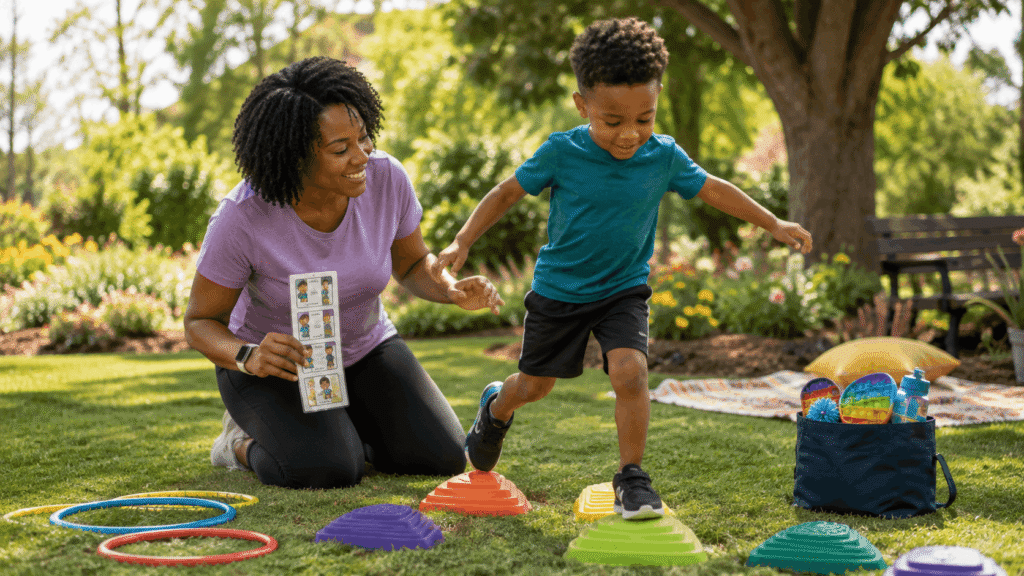
4. Movement Activities
Some autistic children benefit from movement-based activities.
Examples:
- Dancing
- Jumping games
- Obstacle courses
- Yoga
- Stretching exercises
Movement can support:
- Body awareness
- Coordination
- Emotional regulation
5. Outdoor Activities for Autism
Outdoor environments provide many natural sensory opportunities.
Outdoor activities may include:
- Nature walks
- Gardening
- Exploring textures in nature
- Outdoor games
- Water play
Outdoor activities can support:
- Physical development
- Curiosity
- Confidence
- Connection with nature
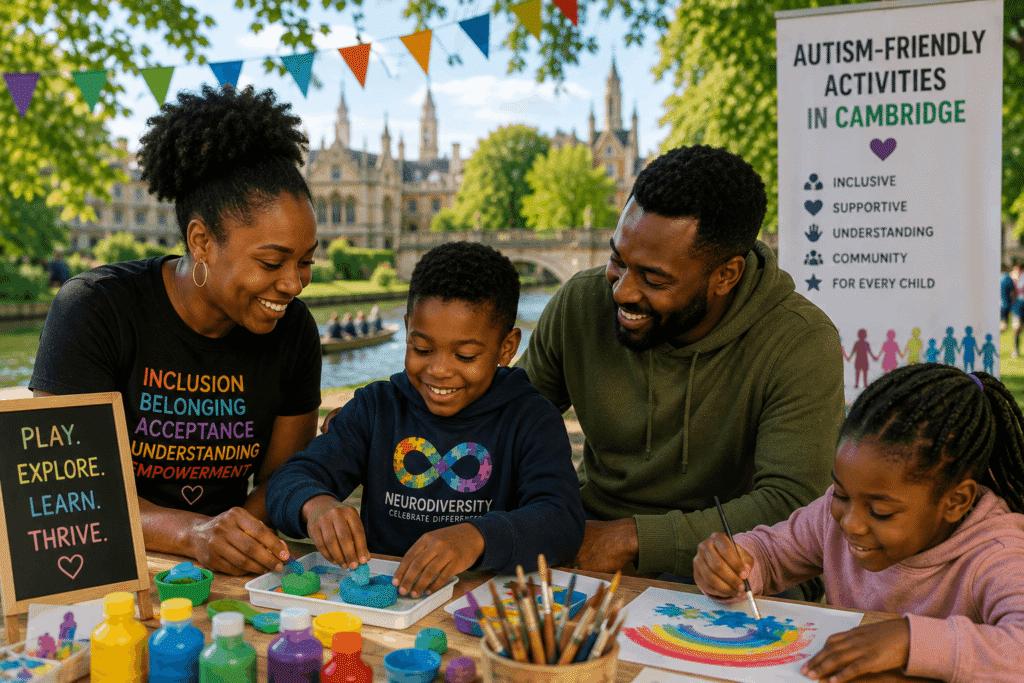
Sensory Play Activities for Autism in Cambridge
Families looking for autism-friendly activities in Cambridge can benefit from inclusive environments where children can explore safely.
Accessible activities can help children:
- Meet others
- Build confidence
- Develop interests
- Experience belonging
At Thriving Beyond the Label, our programmes create welcoming spaces for neurodivergent children and families.
Inclusive Activities Through Thriving Interests Holiday Club
Our Thriving Interests Holiday Club supports neurodivergent children aged 5–13 through creative and engaging activities.
The programme includes:
- Creative arts
- STEM activities
- Music
- Movement
- Sensory play
- Life skills
The focus is on helping children discover their interests while building confidence in an inclusive environment.
Learn more:
How Parents Can Choose the Right Sensory Activities
Choosing activities is about understanding your child’s preferences.
Consider:
Your Child’s Interests
A child who loves technology may enjoy:
- Coding activities
- Building projects
- Interactive games
A child who enjoys creativity may prefer:
- Painting
- Music
- Crafts
Your Child’s Sensory Needs
Some children may prefer:
- Calm activities
- Soft textures
- Quiet spaces
Others may enjoy:
- Movement
- Messy play
- Active exploration
Your Child’s Comfort Level
The goal is not to force participation.
Children should be encouraged to explore at their own pace.
A positive sensory experience should feel:
- Safe
- Enjoyable
- Supportive
Supporting Neurodivergent Children Beyond Activities
Sensory activities are one part of supporting neurodivergent children.
Families may also benefit from:
- Parent support
- Professional guidance
- Community connection
- Educational resources
Our Parent & Carer Support programme provides:
- Workshops
- Webinars
- Peer support
- Practical guidance
Learn more:
Building Sensory-Friendly Communities
Creating inclusive communities means understanding different sensory needs.
Schools, organisations and community spaces can support children by considering:
- Noise levels
- Accessibility
- Flexible participation
- Clear communication
Thriving Beyond the Label works to promote inclusion through:
- Community events
- Awareness activities
- Family programmes
Explore our community work:
Why Sensory Awareness Matters for Schools and Organisations
Understanding sensory differences helps professionals create better environments.
Teachers, organisations and employers can benefit from learning about:
- Autism inclusion
- Sensory needs
- Neurodiversity
- Inclusive communication
Our Neurodiversity Training supports schools, professionals and organisations in developing inclusive practices.
Learn more:
Working Together to Support Neurodivergent Children
Supporting children requires collaboration between families, professionals and communities.
Thriving Beyond the Label works with:
- Parents
- Schools
- Therapists
- Healthcare professionals
- Community organisations
to improve opportunities and support networks.
Learn more about our partnerships:
Frequently Asked Questions
What are sensory activities for autism?
Sensory activities are activities that engage the senses and support learning, emotional regulation and exploration for autistic children.
Are sensory activities only for autistic children?
No. Sensory activities can benefit many children. However, they can be particularly helpful for autistic and neurodivergent children who experience sensory differences.
What are some simple sensory activities at home?
Examples include playdough, painting, music, movement games, water play, nature activities and sensory trays.
Can sensory activities help with emotional regulation?
Yes. Many children use sensory experiences to feel calm, focused and comfortable.
Where can families find autism activities in Cambridge?
Families can explore inclusive programmes, community events and activities designed for neurodivergent children through organisations such as Thriving Beyond the Label.
Final Thoughts: Helping Children Explore Their World
Sensory activities are about more than play.
They provide opportunities for children to learn, communicate, create and build confidence.
Every child experiences the world differently, and those differences should be understood and celebrated.
By creating supportive environments and offering meaningful activities, families and communities can help neurodivergent children develop their strengths and thrive.
At Thriving Beyond the Label, we are committed to creating inclusive opportunities where every child feels valued.
Contact Thriving Beyond the Label
Looking for Inclusive Activities or Support?
Whether you are a parent, carer, professional or organisation, we would love to connect with you.
We support families through:
- Autism support
- SEND support
- Inclusive programmes
- Community activities
- Partnership opportunities
Contact us:
Together, we can create inclusive spaces where neurodivergent children feel supported, understood and empowered.